clovis community college campus field guide
welcome! this is a collection of hand drawn illustrations of most of the vertebrates that you can find on campus. this includes birds, mammals, herps, and reptiles. take a look around and see if you find anything you recognize!
directory
what kind of animal did you see on campus?
to start, pick one of the buttons that best suits the organism that you saw on campus.mammal: warm blooded with hair/fur, like squirrels.
bird: warm blooded with feathers.
amphibian: cold blooded and slimy, like frogs.
reptile: cold blooded with scales, like lizards.
if a button is broken, it is likely on purpose for right now as this gets actively updated!
interested in learning more about wildlife? check these out after! you can learn it too:
mammals
ordered by family
sciuridae

california ground squirrel
otospermophilus beecheyi
habitat: urban and suburban habitats, grasslands, oak woodlands, pastures, roadsides, parks, open areas
behavior: live in colonies
nesting: burrow systems
field notes: sometimes you might think you heard a bird calling. 80% of the time.. it's actually one of these alerting the rest that there is danger nearby.
distinguishing traits
physical: white speckling in the fur. fur around the eyes is a lighter/whitish color
behavioral: "ground squirrel" - they prefer to stick to the ground. it's where they feel the most comfortable!
birds
ordered by family
mimidae

northern mockingbird
mimus polyglottos
habitat: arroyos, canyons, desert and arid habitats, fields, meadows, grasslands, forests, woodlands, saltwater wetlands, shrublands, savannas, thickets, urban and suburban habitats
behavior: direct flight, rapid wingbeats, ground forager
nesting: shrub
field notes: a bird that exhibits mimicry. can and will learn other songs unique from their own!
distinguishing traits
physical: bright white wing patches visible on the bottom of their wings when they are in flight. long tails
behavioral: they exhibit nighttime singing, and are a species that is capable of mimicry! often a birder's nightmare because they are good at it and can trick you if you aren't well versed in songs and calls!
trochilidae

anna's hummingbird
calypte anna
habitat: arroyos, canyons, desert and arid habitats, forests, woodlands, shrublands, savannas, thickets, urban and suburban habitats
behavior: flitter, hovering, rapid wingbeats
nesting: tree
field notes: their heads noticeably flash a bright pink when they get mad.
distinguishing traits
physical: very green.. bright pink head/face that flashes, a territorial display.
behavioral: during mating displays, males will make a loud squeak as they reach the bottom of a courtship dive.
corvidae

california scrub-jay
aphelocoma californica
habitat: forests, woodlands, shrublands, savannas, thickets, urban and suburban habitats
behavior: flap/glide, undulating, ground forager
nesting: tree
field notes: NOISY. if you think you saw a blue jay here in California, it's actually probably one of these!
distinguishing traits
physical: distinctive azure blue, have a bold blue breast band that frames the white on their chest almost like a necklace! they can look pretty dark too, but it's hard to miss the bold blue!
behavioral: they tend to look hunched over and go between trees and the ground fairly often
passerellidae

white-crowned sparrow
zonotrichia leucophys
habitat: arroyos, canyons, desert and arid habitats, fields, meadows, grasslands, forests, woodlands, coasts, shorelines, high mountains, tundra, boreal, urban and suburban habitats
behavior: direct flight, flitter, rapid wingbeats, ground forager
nesting: ground
field notes: could potentially be confused with white-throated sparrows, which we also have in california. the main difference that I look for is whether or not they have little yellow eyebrows, as well as a lack of a distinctive white throat on this one.
distinguishing traits
physical: white and black heads (their crown) with NO yellow
behavioral: often seen in flocks, look for them foraging in groups around bushes!
sturnidae

european starling INVASIVE
sturnus vulgaris
habitat: arroyos, canyons, coasts, shorelines, desert and arid habitats, fields, meadows, grasslands, forests, woodlands, landfills, dumps, saltwater wetlands, shrublands, savannas, thickets, urban and suburban habitats
behavior: direct flight, flap/glide, formation, rapid wingbeats, ground forager
nesting: cavity
field notes: compete with our native bird species for nesting spots. their body shape is unique in that their bodies are plump, especially in comparison to our native birds, meaning that one of the ways in which we can help mitigate their potential to out compete is by making nesting boxes that have entry holes too small for their bodies to fit through.
distinguishing traits
physical: thick bodies that are a characteristic our native birds lack. may be seen with white spots and have dark, glossy feathers
behavioral: LOUD.
tyrannidae

black phoebe
sayornis nigricans
habitat: arroyos, canyons, desert and arid habitats, fields, meadows, grasslands, lakes, ponds, rivers, shrublands, savannas, thickets, urban and suburban
behavior: direct flight, hovering, flycatching
nesting: cliffs, walls, overhangs
field notes: cutest song ever! whenever we go somewhere where water is nearby, i can usually spot at least one of these gathering mud for its nest. they nest in overhangs, like against the walls of buildings, so you can see them around structures if they have a nest nearby!
distinguishing traits
physical: black bodies and white bellies
behavioral: can often find them around areas with water or mud, as they use it to build their nests
fringillidae
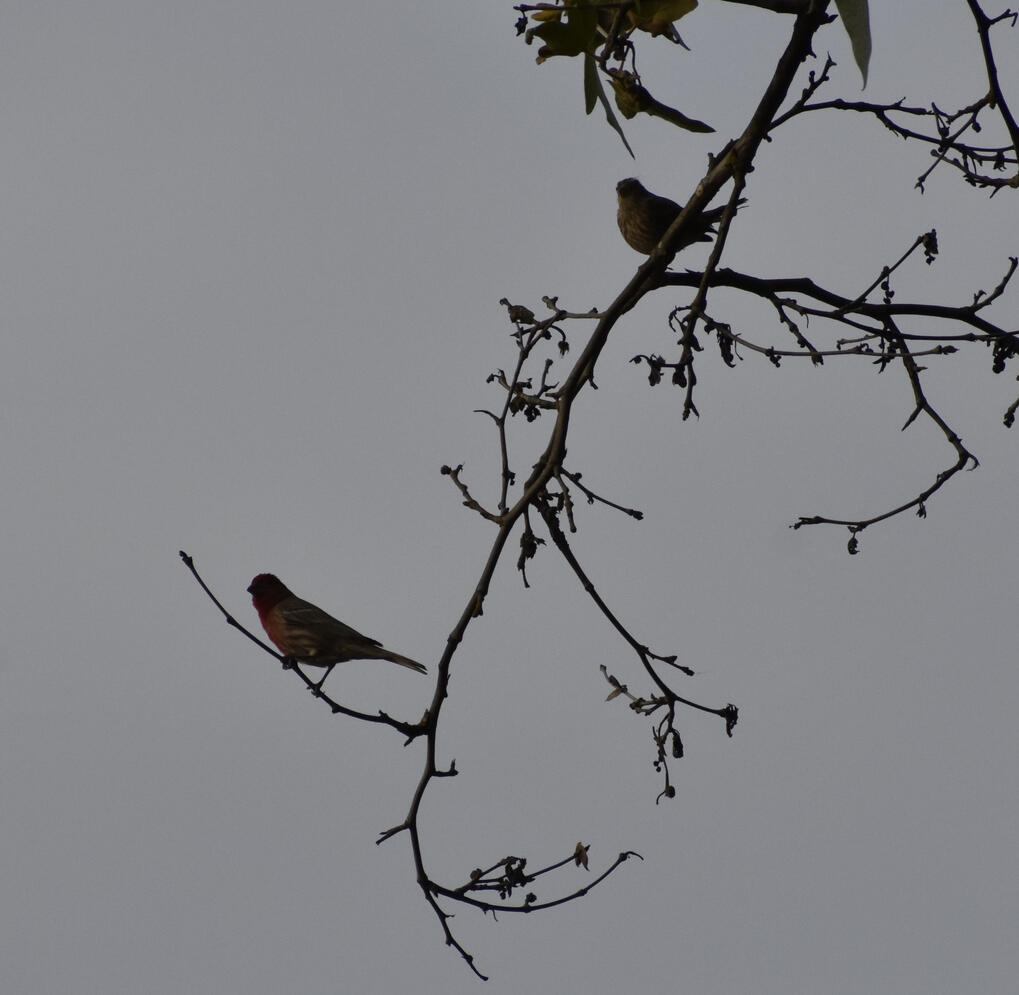
house finch
haemorhous mexicanus
habitat: arroyos, canyons, desert and arid habitats, fields, meadows, grasslands, forests, woodlands, high mountains, shrublands, savannas, thickets, urban and suburban habitats
behavior: flitter, rapid wingbeats, undulating, ground forager
nesting: tree
field notes:
distinguishing traits
physical: sexual dimorphism where males have a red head and chest, while females are more muted
behavioral:
icteridae
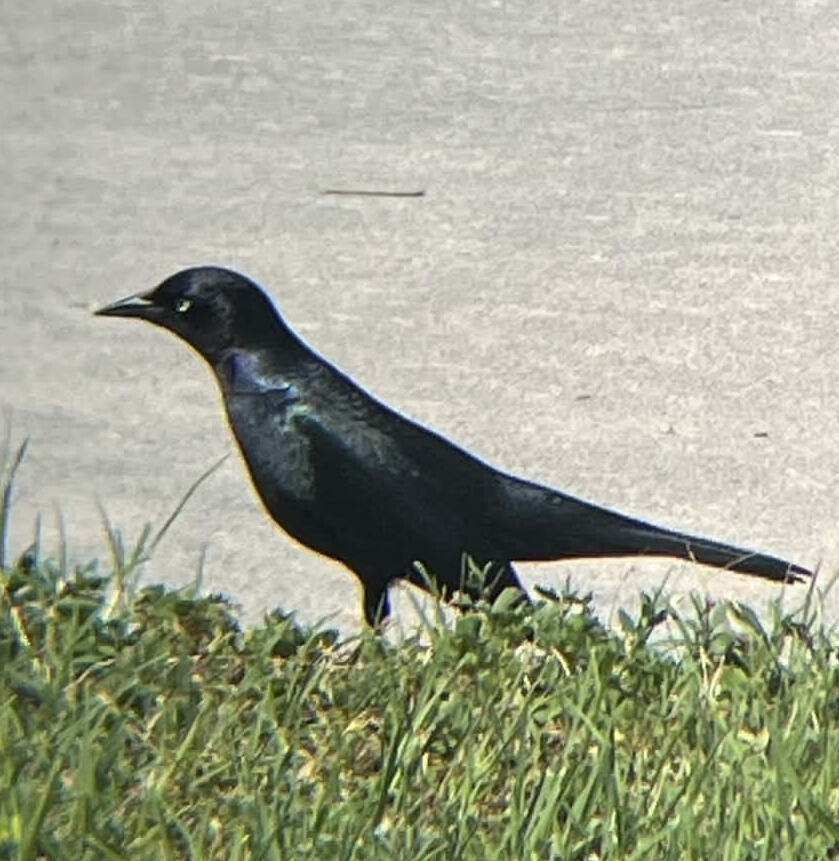
brewer's blackbird
euphagus cyanoocephalus
habitat: coasts, shorelines, desert and arid habitats, fields, meadows, grasslands, forests, woodlands, landfills, dumps, shrublands, savannas, thickets, urban and suburban habitats
behavior: direct flight, undulating, ground foraging
nesting: shrub
field notes:
distinguishing traits
physical: males have glossy black feathers that look like an oil spill with a bright eye, females are brown without the bright eye
behavioral: can puff up and make a weird sound. also it seems like they tend to walk with their wings pointed down
passeridae
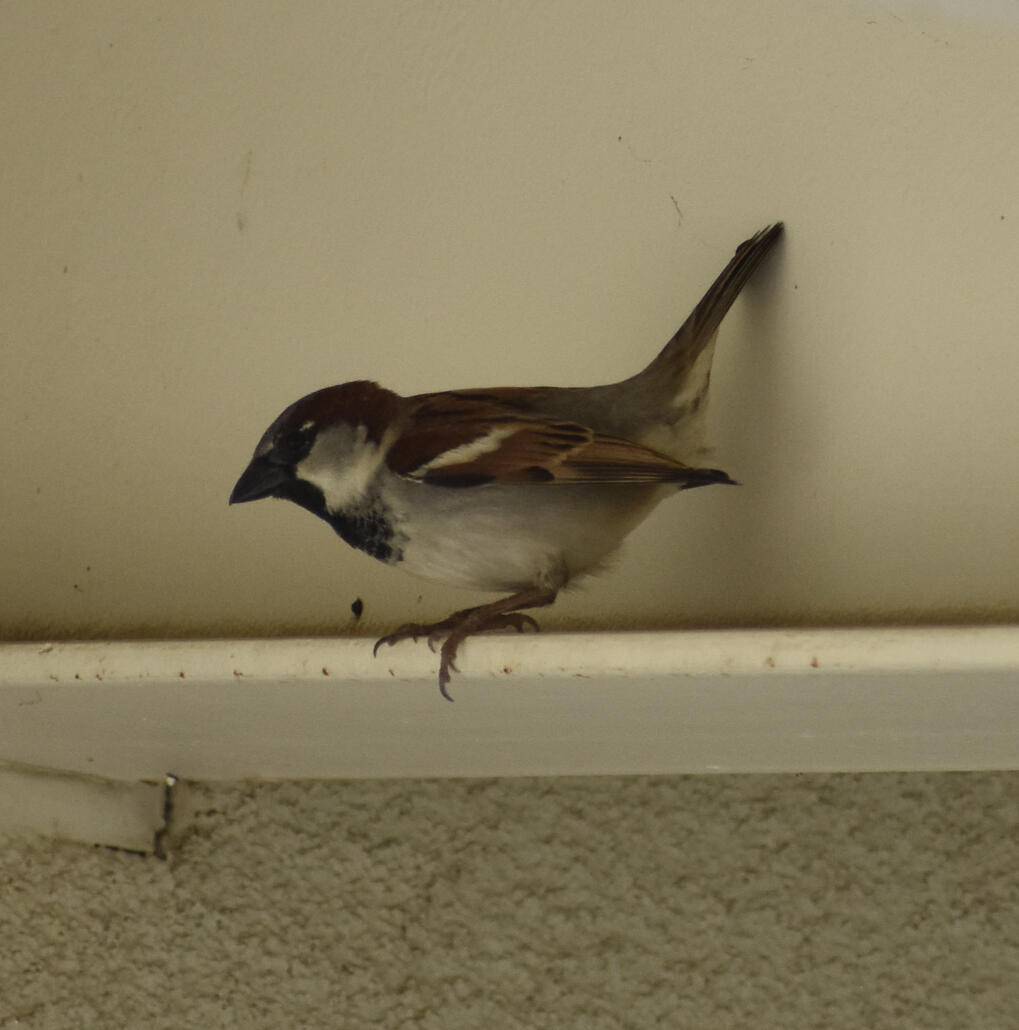
house sparrow INVASIVE
passer domesticus
habitat: fields, meadows, grasslands, urban and suburban habitats
behavior: direct flight, flitter, ground forager
nesting: cavity
field notes: incredibly common and likely one of the sparrows here that most people are best familiar with.
distinguishing traits
physical:
behavioral:
accipitridae
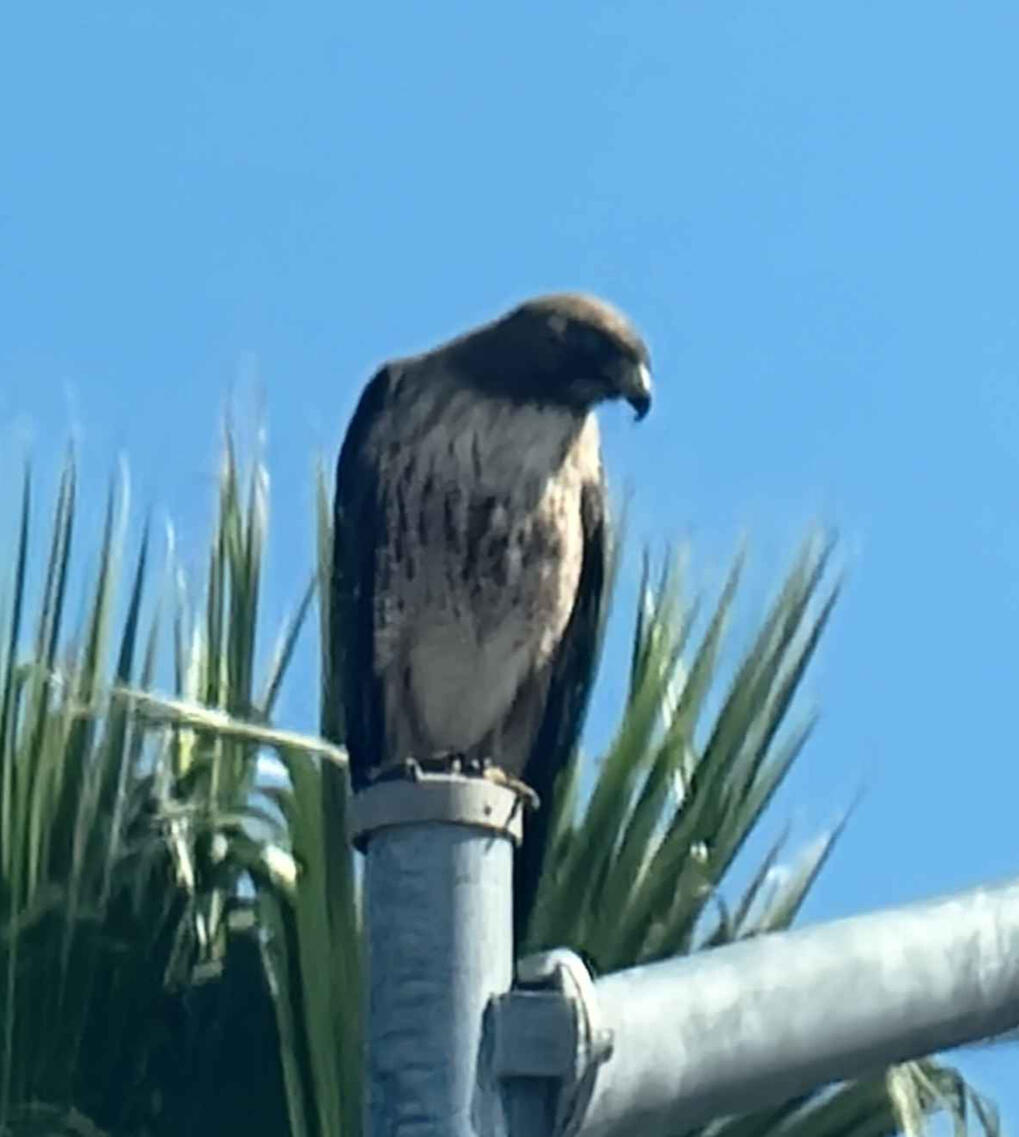
red-tailed hawk
buteo jamaicensis
habitat: coasts, shorelines, desert and arid habitats, fields, meadows, grasslands, forests, woodlands, landfills, dumps, saltwater wetlands, shrublands, savannas, thickets, tundra, boreal, urban and suburban habitats
behavior: direct flight, soaring
nesting: tree
field notes: hollywood's celebrity who is regularly the voice of all of the raptors in movies! whatever comes to mind when you imagine a bald eagle in a movie, these are probably what you're actually hearing!
distinguishing traits
physical: reddish-brown tail, characteristic "bra" pattern on their chests
behavioral: lean forward when perched
amphibians
ordered by family
hylidae
pacific chorus frog
pseudacris sierra
habitat:
behavior:
nesting:
field notes:
distinguishing traits
reptiles
ordered by family
phrynosomatidae
western fence lizard
sceloporus occidentalis
habitat
behavior
nesting
field notes: high masculinity gym bro lizard
distinguishing traits
physical:
behavioral: males will do push ups at each other as a dominance display
about
Hi!! I'm Madison Castillo, I'm a biology major with an interest in pursuing scientific illustration as a potential career opportunity. I'm fascinated with wildlife and everything about them!! I love to learn and to teach others about all the things I've picked up. Hopefully this guide did that for you! All of the images are either hand drawn by me (sketched on paper and colored digitally) or taken by one of the students at CCC.Aside from that, I want to show some appreciation for those who helped out with putting this together!Thank you to Dr. Whitford and Dr. Freymiller for all their help with organizing this, as well as everyone else who showed up to help give feedback on it!! Couldn't have done it without them :]
references
1. Cornell Lab of Ornithology. 2026. All about birds. Cornell Lab of Ornithology, Ithaca, New York, USA. https://www.allaboutbirds.org (Accessed 4/1/2026).2. National Audubon Society. 2026. Guide to North American Birds. https://www.audubon.org/bird-guide. Accessed 1 April 2026.3. Sibley, D. A. 2014. The Sibley field guide to birds of western North America. Second edition. Alfred A. Knopf, New York, New York, USA.
JOIN THE CONSERVATION CLUB!!
we are really cool and do fun things like tend to our native plant garden and go on cool field trips!!!! JOIN US FOR NEXT SEMESTER!!!